


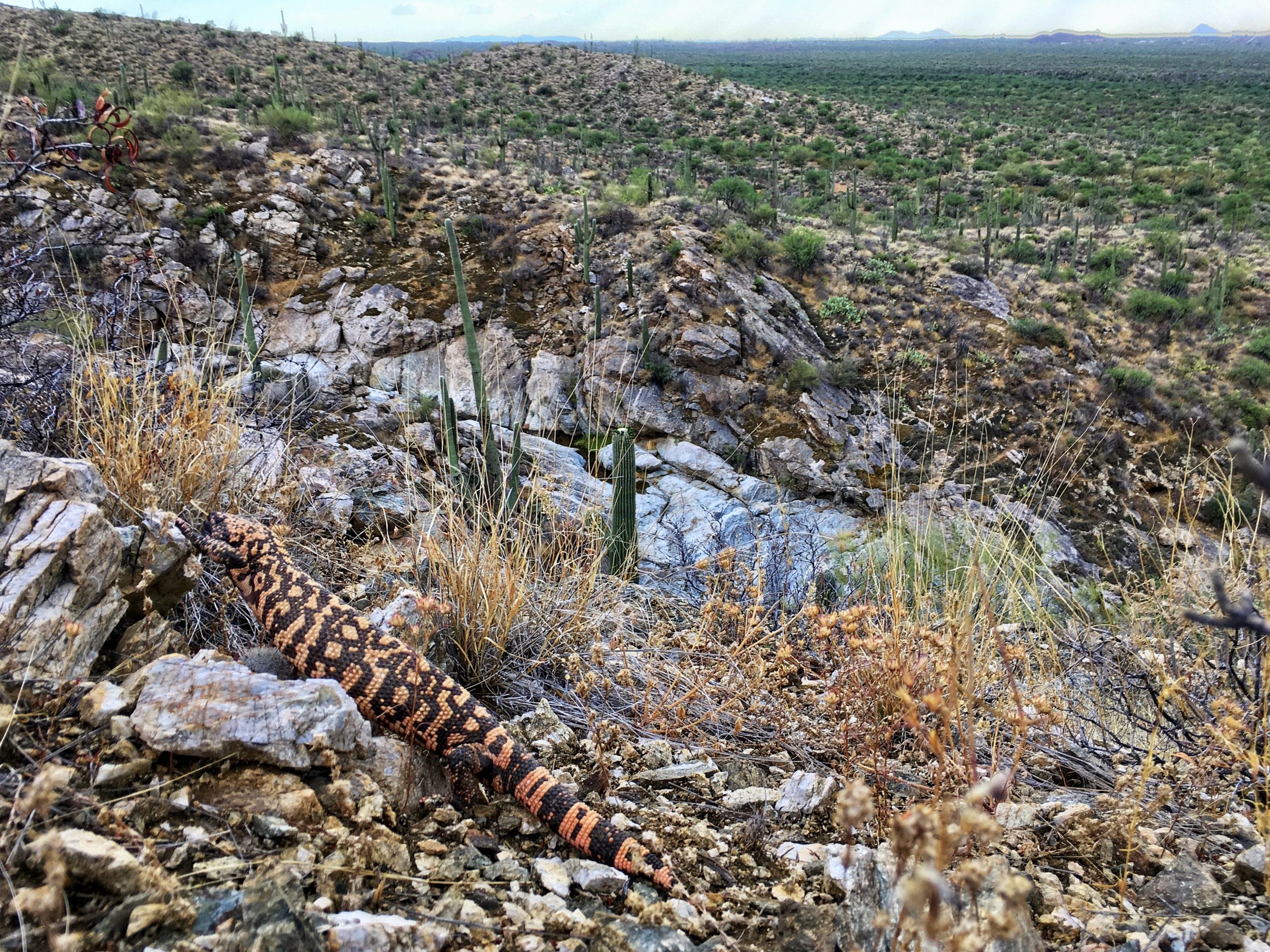


On the Arizona Trail, gold’s legend and copper’s lure color the search for quick solutions
Arizona Republic (Nov 17, 2025) by Joan Meiners
Day 21, Mile 512 (Bike detour passage 19/18: around Superstition Wilderness)
In the 1870s, a European prospector found a solution to all his problems in Arizona’s Superstition Mountains. He struck gold, literally, or so the legend goes, and left several caches hidden in the hills.
On his deathbed in Phoenix, the “Dutchman,” as he is remembered, supposedly drew a map to the treasure for a friend, who couldn’t locate it but managed to turn a profit by selling copies of the map to other lost souls. One fortune seeker may have even found it, according to Superstitions lore, only to be killed before he could put the riches to use. Some hikers today still keep an eye out for a life-changing glimmer.
Never mind that many geologists say it’s unlikely there are or ever were any gold deposits in these volcanic peaks. Never mind that searching for that mythical mine doomed several lives to end in frustration or murder. People want their chance to strike it rich. They can’t resist the allure of a quick solution.
At Lost Dutchman State Park in the shadow of the Superstitions, I met with Karen Bradshaw, an environmental law professor at Arizona State University, who brought her kids out to meet me on trail as part of her campaign to immerse them in nature.
Bradshaw is on a full-immersion mission. She’s rewilded her yard in Phoenix and wrote a book about legally sharing land with wildlife. If she could, she told me, she’d take the Supreme Court justices on a western nature retreat.
She thinks getting outside would help more of the people who hold decision-making power in this country better grasp the local, community-based argument for conservation in many land-based issues — often the less alluring option compared to the flashier promise of resource extraction proposals. It might even help bridge the widening political divide.
Almost none of the higher court judges have spent any significant time in the American West, Bradshaw said, which is where a vast majority of the nation’s public lands and Indigenous cultures have always been. This east-west geographical divide intersects with the left-right political divide to result in a fracturing since the environmental movement of the 1960s and 70s of what it even means to be an advocate for nature, she opined as we sat with a vertical view into the rocky pockets of lost solutions.
“In some ways, the new environmental issue of our time is climate responses versus traditional land and-or natural values,” Bradshaw said. “You see the split when you mention rare earth minerals versus traditional land or natural values, biodiversity values, the fight for public lands and cultural spaces.”
“There’s something really interesting happening that has not yet been fully articulated by the American public, which is sort of the fight for the soul of what it means to be an environmentalist.”
We’ve seen this play out recently in the bipartisan pushback to a federal proposal to sell off public lands — which united passionate western liberals and Republicans this summer during the debate over Trump’s Big Beautiful Bill in ways few other issues have managed to do.
A muddying of what it means to be pro-environment may also be playing out in the decades-long controversy over Oak Flat — a site not far from where we were sitting at Lost Dutchman State Park that holds irreplaceable sacred value to the Apache people, but that copper miners have said is needed for the clean energy transition.
In the era of climate change posing risks to every environment and community on earth, which stakeholders have the true interests of nature in mind? Many climate scientists insist that mitigating how much carbon is released into the air should be the primary focus to broadly protect places and people. Hunters and campers are frequently biodiversity and conservation-minded about their local spots even if they don’t stress that bigger picture. Meanwhile, many tribes, who have been tenderly stewarding the land the longest, feel their voices go unheard.
“If you think about the relationship that the Apache have described as having with the landscape here at Oak Flat, you have a representation of a different imagining of the human relationship with nature,” Bradshaw said. “And I would classify environmentalism, climate activism and Indigenous world views as three distinct ways of looking at the natural world.”
With intensifying climate change overlaid on top of often conflicting local, regional, federal, global and cultural concerns about how we manage our environments, the map to solutions becomes ever more convoluted. Fortunately, we’ve never had more resources at our disposal to communicate with each other and explore the best options.
After my own long list of problems on trail last week through the uncompromising Mazatzals, I had found my solution by going into Phoenix, ordering overnight shipping on a new fork bag mounting system, installing it late at night in a friend’s garage and then getting a ride with all my gear back out to the trail. Armed with leftover Halloween candy, I was ready to get back to my own prospecting.
On my way out of the state park on the Arizona Trail’s bike detour route, the relentlessly rocky Jacob’s Crosscut trail kept me in view of Lost Dutchman’s iconic cliff face that, in the golden glint of sunset from my camp spot that night off Silver King road, certainly held the sheen of promise.
Day 22, Mile 534 (Bike detour passage 19/18: around Superstition Wilderness)
The next morning, I got an early start to make sure I’d be on time for another interview appointment at Picketpost Trailhead. I pushed through the rest of the Gold Hills, through a jarringly urban golf course community in Apache Junction, and rejoined the Arizona Trail main route right as it entered copper country.
Sandy Bahr pulled into the dusty parking lot just down the road from the town of Superior and the Oak Flat campground as I was sitting in the only patch of shade the rest stop between passages 18 and 17 offered. She joined me at the eastern half of a metal picnic table and we talked while progressively scooting down opposite benches away from the angling sun.
Like the Red-tailed hawk I spotted sitting atop a saguaro as I rode to meet her, Bahr has been watching over Arizona’s environment for decades. And she has a pretty good memory for all the twists and turns various controversies have taken.
“From the beginning, the Sierra Club has objected to the land exchange,” Bahr said, the congressionally mandated swap of land owned by Resolution Copper farther south in Arizona for Oak Flat, just 10 miles from where we sat as the hawk flies. “Some places are just really important and more valuable than the ore that is beneath them.”
I had visited Oak Flat last fall, during a “critical minerals” tour of sites across Arizona and California with relevance to the clean energy transition with the Institute for Journalism and Natural Resources. As we sat under oak-filtered autumn sun, Wendsler Nosie, a tribal elder who has been camping at the site to protest its destruction in the name of critical minerals, tried to convey to the group how much this spot has meant to his people and their religious freedom.
Just before we all ate dinner together, finding physical nourishment there as well, his daughter, Vanessa Nosie, led us up a short hill to a site where Apache girls have entered womanhood via elaborate, demanding and deeply meaningful ceremonies for generations. If Resolution Copper digs a 2-mile-wide mine beneath that spot, it will eventually fall into the earth and be lost to future girls hoping to dance their way into womanhood, she said.
Representatives for the mining company did not agree to meet with us on that trip. But elected leaders in Superior were adamant that they had spent time with the project’s environmental impact statement and that the plan was the best option for everyone involved. It promised critical copper for the clean energy transition (a central solution to limit the fossil fuel emissions causing climate change), as well as American independence from foreign markets and a revitalization of this historic mining town.
Resolution Copper, which is owned by British and Australian companies, has its own storied history with advertising bids to win popular support for the project. During the Biden administration — which offered incentives for solar panel and electric vehicle manufacturing as well as the expansion of transmission lines, all of which require copper — the pitch often centered on how the mine would supply the materials necessary to slow the environmental toll of climate change, Bahr remembers.
In 2025, you don’t hear them talking about climate change, she said. Now it’s all about domestic production of rare earth metals.
“It shows you that a lot of it is marketing,” Bahr said.
While certain sectors of the public remain unconvinced climate change is even real, others who want solutions but lead busy lives can understandably struggle to decipher which of the options offered are worth the tradeoffs. Carbon capture, a technology to remove carbon emissions from the atmosphere — which has not been proven at scale but has received much funding and fanfare — comes to mind. (I asked John Podesta about the Biden administration’s backing of this so-far false solution in a live interview last year.) It’s one thing to invest in research and development of future solutions, and another to use an unproven technology to promise eventual damage control while green lighting new oil and gas projects,
Analyses suggest the clean energy transition will require a boost in the influx of copper into American markets. But many experts believe there are other ways to get it — by “remining” old tailings or recycling urban uses. Improved energy efficiency and conservation could also be real solutions if given more attention. Each offers a pathway toward advancing clean energy while saving Oak Flat. Because of this, members of the Apache Stronghold resistance effort view the continued push for the copper mining project as little more than an attempt to extinguish their culture, religion and place on the land.
Bahr agrees, and would like to see the solutions focus shift to other ideas for extending the utility of solar energy, like the hydropower battery project at nearby Roosevelt Lake proposed by Phoenix-area utility Salt River Project, and the company’s pilot program to test new iron flow batteries. The hydropower option, which I saw by helicopter earlier this year, would result in a new dam, a flooded valley and carbon emissions from decomposition of that habitat. But, like the myth of striking gold without bloodshed, rewards often carry risk. The trick is knowing which sacrifices are survivable.
“Someone once said ‘there’s no silver bullet, only silver buckshot,’ and I think that’s exactly right,” Bahr said. “Think of all the small things we can do that add up to the big thing we need to do.”
When the sun shifted enough to remind us that dark was not far off, I filled my own reservoirs with a gallon of water she had brought from Phoenix and departed south on the trail from Picketpost.
Northbound hikers and riders had been telling me when I asked about their favorite passage that these next miles harbored a special Sonoran alpenglow. I found myself struggling to focus on the undulating trail, unwilling to sacrifice glimpses of a saguaro forest catching sunbeams with open arms below fairytale amber cliffs.
Day 23, Mile 560 (Passage 17: Alamo Canyon)
The next morning, I started a 2,000-foot ascent over 11 rocky miles to the next reliable water source, a rainwater collector.
I saw the hilltop structure about a mile before I reached it. Installed by the Arizona Trail Association to bridge gaps in water access exacerbated by a 25-year megadrought that scientists say is the driest the American Southwest has experienced in 1,200 years, the shade cast by its inverted-umbrella shape became a siren song encouraging me up the last inclines in 80-degree sun.
I lingered there as long as I dared, then pushed my bike into the switchbacks of the next passage still under a broiling sun. With steep dropoffs giving way to desert vistas and treacherous terrain, I’d need to make 10 more miles to reach a level spot for my tent along the Gila River.
As the sun set behind rocky silhouettes with me still nowhere near flat ground, I turned on my handlebar light and adopted the nocturnal habits of other desert dwellers.
In cooler hours under the cover of darkness, the Arizona Trail came alive. A kangaroo rat hopped across my path, its tufted tail disappearing beneath a tooth-leafed mountain mahogany. A pair of ringtails hurried up the loose slope, glancing back as if to ask what I was doing there at this hour. The beady bird eyes of common poorwills reflected at me like warnings from the cliff side path before bursting into the air like tiny fireworks as I approached.
About 8 p.m., two saguaro sentinels on either side of the trail, backlit by a blueish moonlit sky, welcomed me into the Gila River corridor. I had arrived at the lowest point on the Arizona Trail.
Day 24, Mile 582 (Passage 16: Gila River Canyons)
The adage meant to reassure people at a personal rock bottom that “it can only go up from here,” is not as comforting when what the future holds is an actual vertical trail.
I spent my birthday pushing my bike up and down steep and remote switchbacks, with only a cargo train rattling alongside the Gila River as company, wondering about the mindset of whoever envisioned this as a bike route. A few miles from the Kelvin Trailhead near the mining town of Kearney, where a friend was meeting me with a celebratory dinner, my rear wheel fell off. Turns out my thruaxel had been slowly jostled loose and had finally given up. I knew it couldn’t be far behind, so I walked back to get it before reinstalling my wheel and turning my attention to fixing my now misaligned brake calipers, without internet access or much remaining sunlight.
The bicycle was a marvelous invention, I reminded myself, that brought transportation freedom and recreation enjoyment to the masses. But solutions often come with their own new set of problems.
To read the article online, click here.
