


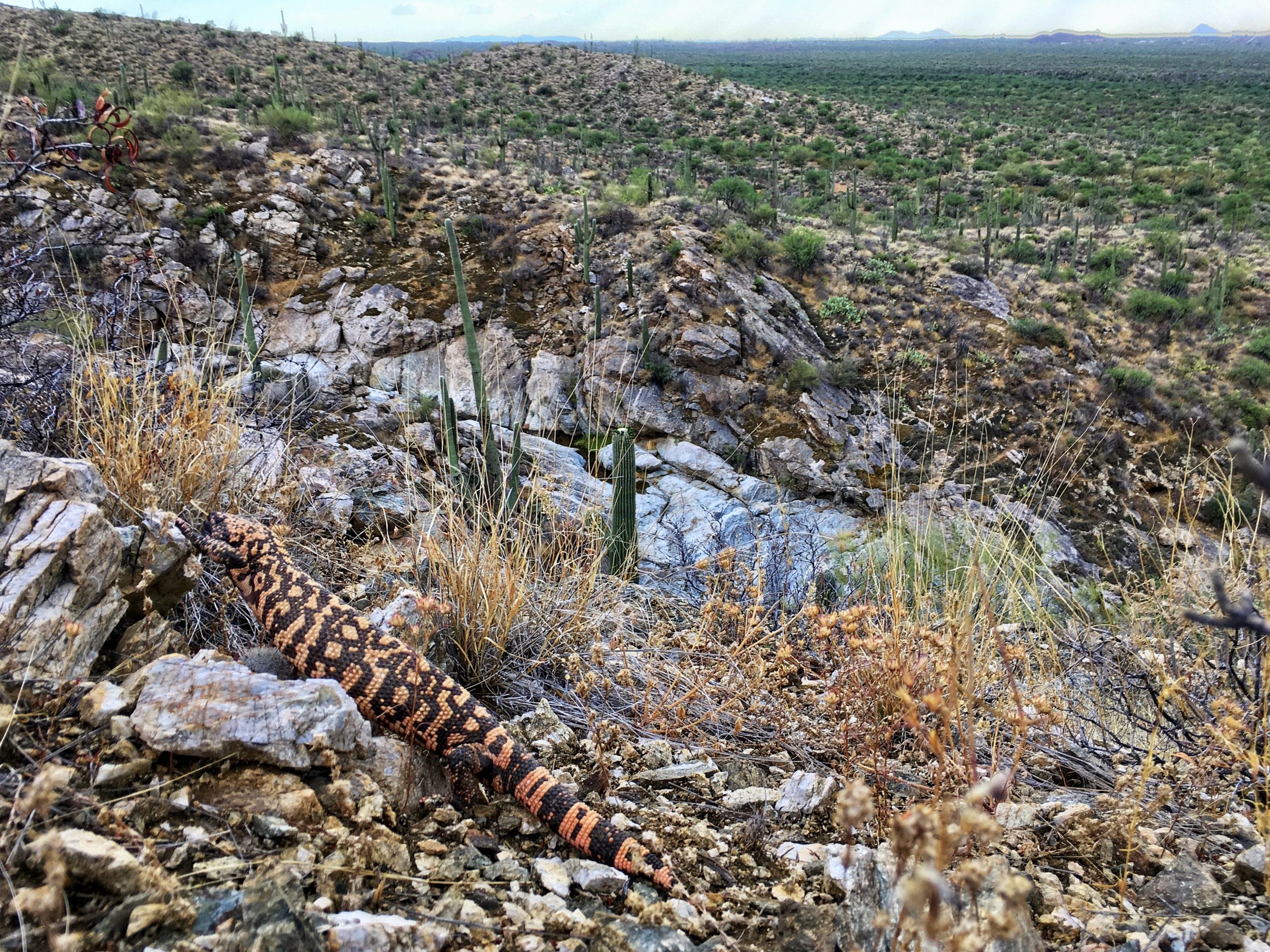


People aren’t the only ones using the Arizona Trail
ASU News (Oct 1, 2026) by Ayrel Clark-Proffitt
The nearly 800-mile Arizona National Scenic Trail captures the wildness and remarkable diversity of Arizona, stretching from the Mexican border in the south to the state’s boundary with Utah in the north.
Those who travel from end to end experience 100,000 feet of elevation change and traverse more than a dozen biomes, from the ecologically extraordinary Sonoran Desert to the soaring sub-alpine forests of the San Francisco Peaks.
The hikers, cyclists and horseback riders who travel the trail are rewarded with views of the state’s spectacular biodiversity. If they’re lucky, they may even catch a glimpse of the birds, bears, cats and other wildlife that call Arizona home.
But those encounters may be more than chance. We often think of trails as recreation resources for humans, but new research along the Arizona Trail provides evidence that animals use these pathways, too — sometimes at the same time as people.
An interdisciplinary team of researchers from Arizona State University partnered with the Arizona Trail Association and the Arizona Center for Nature Conservation/Phoenix Zoo to better understand how animals and humans coexist and interact along the long-distance trail.
Wildlife camera traps installed throughout the trail captured more than 500,000 images over a six-year period, revealing human recreational patterns alongside the presence of 25 mammal species, ranging from mountain lions, elk and black bears to skunks, badgers and deer.
“One of our main focuses was to see how trail use by humans and local wildlife populations interacts, which is a lot harder than it sounds. Humans are just walking a line while the wildlife use the entire ecosystem,” said Jan Schipper, associate research professor at University of Maryland Center for Environmental Science and former ASU associate professor in the New College of Interdisciplinary Arts and Sciences. Schipper led the research team.
The study provides the Arizona Trail’s first detailed baseline of the species using the trail, where they are found and when they are active, as well as how people use the trail for hiking, bicycling and horseback riding.
That baseline offers a starting point for understanding how recreational and wildlife use may overlap, and how trail managers might better account for both.
Shared use
Some animals are nocturnal, but wildlife and people still do use the trail during the same periods of the day, said Lotfi, who is now pursuing a PhD at the University of Vermont. Deer and squirrels, for example, showed activity patterns that overlapped with humans.
“The research proves that this trail is not our trail alone; it is shared between humans and these animals,” he said.
The camera traps also provided an opportunity to study how people use the trail, said Matthew Nelson, executive director of the Arizona Trail Association.
Previous efforts to fully understand how humans traverse the trail — hiking, biking or on horseback — had proved unsuccessful. The trail is long, with many isolated sections, and traditional evaluation methods such as counters don’t distinguish between different types of use, Nelson said.
That broader picture of trail use could help managers make decisions that benefit people and wildlife.
Faranak Parkami, a PhD candidate in community resources and development, said a better understanding of human and animal behavior will allow trail managers to thoughtfully add trail amenities, such as water, shelter and educational signage that encourages responsible recreation.
“Based on where we identified wildlife and visitors, managers along the Arizona Trail can decide to include more signage for responsible tourism, helping visitors be mindful of getting close to animals and how they react if they see one. That’s important for conservation education,” Parkami said.
Value of baseline data
Cataloging where and when different species use the Arizona Trail opens the door for future studies on how humans and animals interact, Lotfi said. Additionally, it could allow for targeted approaches to wildlife conservation by identifying areas where species of concern are most prevalent.
The study is also a tool for the various agencies that manage the Arizona Trail.
Historically, the Arizona Trail has been seen primarily as a recreational resource, Nelson said, but he hopes the research will make agencies more aware of how different animals use the trail and encourage a more holistic approach to trail design that considers not only how to minimize impacts on wildlife, but how trails might benefit it.
Wildlife matters to the humans who use the trail, Nelson added.
“We protect, maintain and manage a trail so people can have their own experiences. But we hear consistently from trail finishers that wildlife play a very important role in their Arizona Trail experience,” he said.
To read the article online, click here.
